
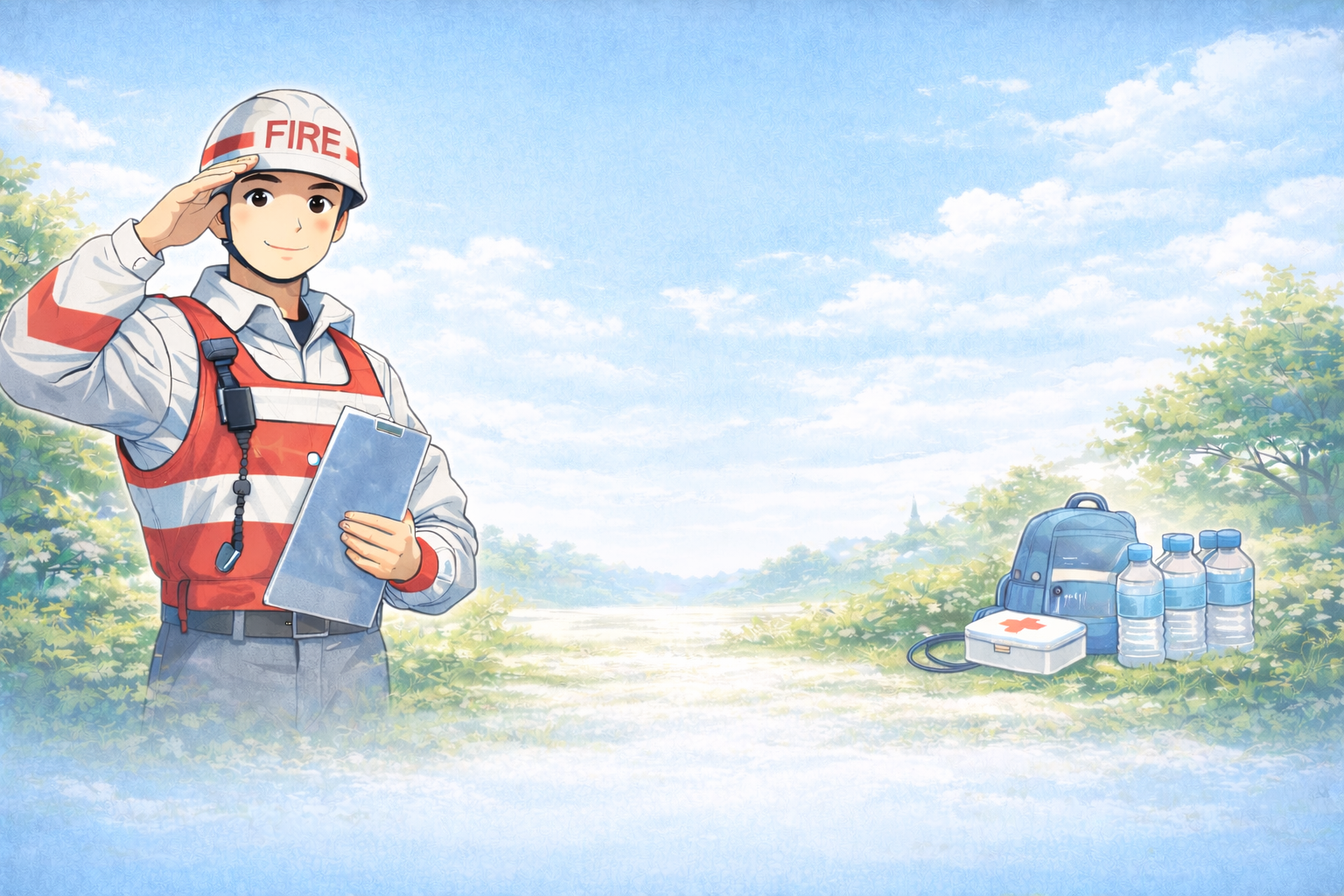
Emergencies that occur at night are especially dangerous. Darkness, disorientation, and delayed responses increase injuries and fatalities. As a former firefighter who responded to night-time disasters, I explain the often-overlooked steps to prepare and survive when emergencies strike after dark.
- ■① Why Nighttime Emergencies Are More Dangerous
- ■② The Most Dangerous Assumption: “I’ll See What Happens”
- ■③ Preparing Your Home for Night Emergencies
- ■④ Immediate Actions Upon Awakening
- ■⑤ Evacuating Safely in the Dark
- ■⑥ Communication During Night Emergencies
- ■⑦ Psychological Preparation
- ■⑧ Lessons From Nighttime Disaster Responses
- ■Summary|Darkness Is a Hazard You Can Prepare For
■① Why Nighttime Emergencies Are More Dangerous
Risks at night include:
- Limited visibility
- Disorientation upon waking
- Difficulty finding exits and emergency supplies
Most preventable nighttime injuries are caused by rushed movement and confusion.
■② The Most Dangerous Assumption: “I’ll See What Happens”
People delay because:
- Danger isn’t immediately visible
- Familiar surroundings feel safe
- Decisions seem less urgent at night
I saw injuries escalate in people who underestimated night hazards.
■③ Preparing Your Home for Night Emergencies
Essential preparations:
- Keep flashlights or headlamps within reach of beds
- Ensure shoes and warm clothing are accessible
- Clear pathways to exits
Prepared homes reduce panic and prevent falls.
■④ Immediate Actions Upon Awakening
When disaster strikes:
- Stay calm and assess the situation
- Put on shoes and grab a light source
- Check for immediate hazards around you
Quick, deliberate action reduces risk.
■⑤ Evacuating Safely in the Dark
Night evacuation strategies:
- Move slowly and deliberately
- Stick to familiar routes
- Keep children, elderly, or vulnerable people close
Controlled movement prevents trips, falls, and congestion.
■⑥ Communication During Night Emergencies
Even at night:
- Pre-arranged signals are vital
- Battery-powered radios provide updates
- Whisper or communicate calmly to avoid panic
Clear communication maintains safety in darkness.
■⑦ Psychological Preparation
Mental readiness improves outcomes:
- Practice night drills
- Prepare children and vulnerable individuals
- Establish routines for emergencies
Confidence reduces freeze responses.
■⑧ Lessons From Nighttime Disaster Responses
From firefighter experience:
- Prepared households avoided injury
- Quick access to light and footwear saved lives
- Calm, structured action prevented panic
Night safety depends on foresight and preparation.
■Summary|Darkness Is a Hazard You Can Prepare For
Emergencies at night amplify risk—but planning mitigates danger.
Conclusion:
As a former firefighter who responded to night disasters, I can say clearly that preparation, light, and calm action save lives. People who plan for nighttime emergencies avoid injuries and move safely. In disasters, darkness is not just an obstacle—it is a hazard to manage.
🛡 What a former firefighter actually relied on in the field
In a blackout, a hands-free lantern is the priority. Phone lights die fast.
📦 LED Lantern, 4 Pack (hands-free) ›
As an Amazon Associate we earn from qualifying purchases.

Comments