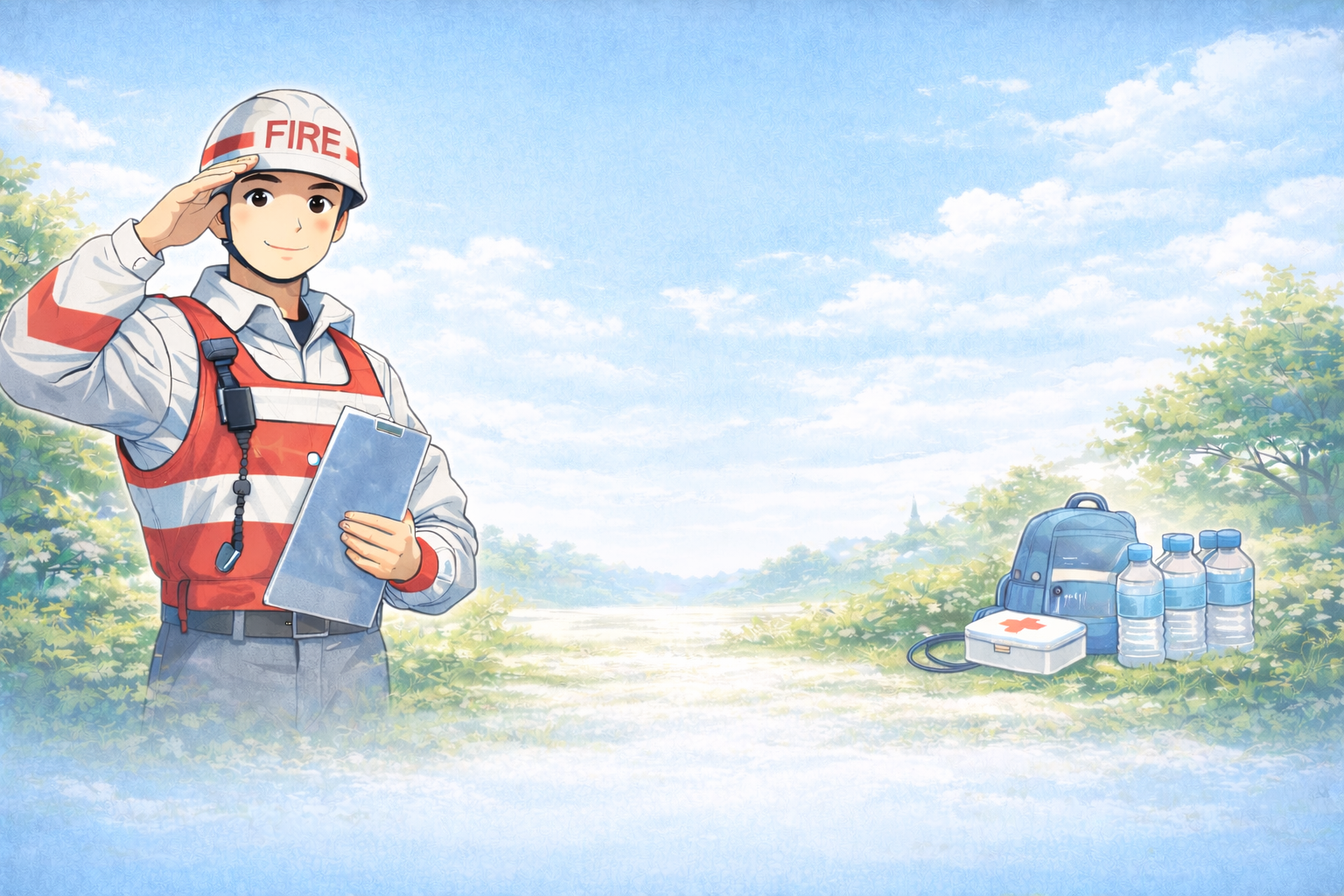
The first 60 seconds of an earthquake are critical. Panic and hesitation cause injuries, while fast and correct actions save lives. In real disaster responses, I have seen that people who know exactly what to do in the first minute suffer far fewer injuries. As a former firefighter, I will explain what truly matters during those crucial seconds.
- ■① The First Moment: Recognize the Shaking Immediately
- ■② Seconds 0–10: Drop to the Ground
- ■③ Seconds 10–30: Protect Your Head and Neck
- ■④ Seconds 30–45: Take Shelter and Hold On
- ■⑤ Seconds 45–60: Stay in Place and Control Panic
- ■⑥ If You Are in Bed or Unable to Move
- ■⑦ What NOT to Do in the First Minute
- ■⑧ Prepare for What Comes After the First Minute
- ■まとめ|One Minute Can Decide Everything
■① The First Moment: Recognize the Shaking Immediately
The moment you feel strong shaking:
- Accept that it is an earthquake
- Stop what you are doing immediately
- Focus only on protecting yourself
Denial wastes precious seconds that you cannot recover.
■② Seconds 0–10: Drop to the Ground
As soon as shaking starts:
- Drop to your hands and knees
- Prevent yourself from being knocked over
- Stay low to avoid falling objects
Standing increases the risk of head and spine injuries.
■③ Seconds 10–30: Protect Your Head and Neck
Once on the ground:
- Cover your head and neck with your arms
- Use a bag, jacket, or pillow if available
- Turn your face away from glass and shelves
Head protection is the most important priority.
■④ Seconds 30–45: Take Shelter and Hold On
If possible:
- Move under a sturdy table or desk
- Hold onto it firmly
- Stay away from windows and heavy furniture
Shelter reduces injuries from falling debris.
■⑤ Seconds 45–60: Stay in Place and Control Panic
During intense shaking:
- Do not try to run outside
- Do not use stairs or elevators
- Breathe slowly and stay focused
Movement during shaking causes most serious injuries.
■⑥ If You Are in Bed or Unable to Move
If you cannot move quickly:
- Stay where you are
- Cover your head with a pillow or blanket
- Keep your body low
Trying to move in darkness or confusion is dangerous.
■⑦ What NOT to Do in the First Minute
Avoid these common mistakes:
- Running outdoors
- Standing in doorways
- Using elevators
- Screaming or panicking
These actions increase risk instead of reducing it.
■⑧ Prepare for What Comes After the First Minute
As shaking begins to weaken:
- Stay alert for aftershocks
- Listen for falling debris
- Prepare to check your surroundings once it stops
The danger does not end immediately.
■まとめ|One Minute Can Decide Everything
The first 60 seconds of an earthquake determine whether you stay safe or get injured. Simple, calm actions protect your body when it matters most.
結論:
As a former firefighter who responded to real earthquake disasters, I have seen that people who drop, protect their head, and stay in place during the first minute survive with fewer injuries. You cannot control the earthquake, but you can control your reaction—and that control saves lives.

Comments